
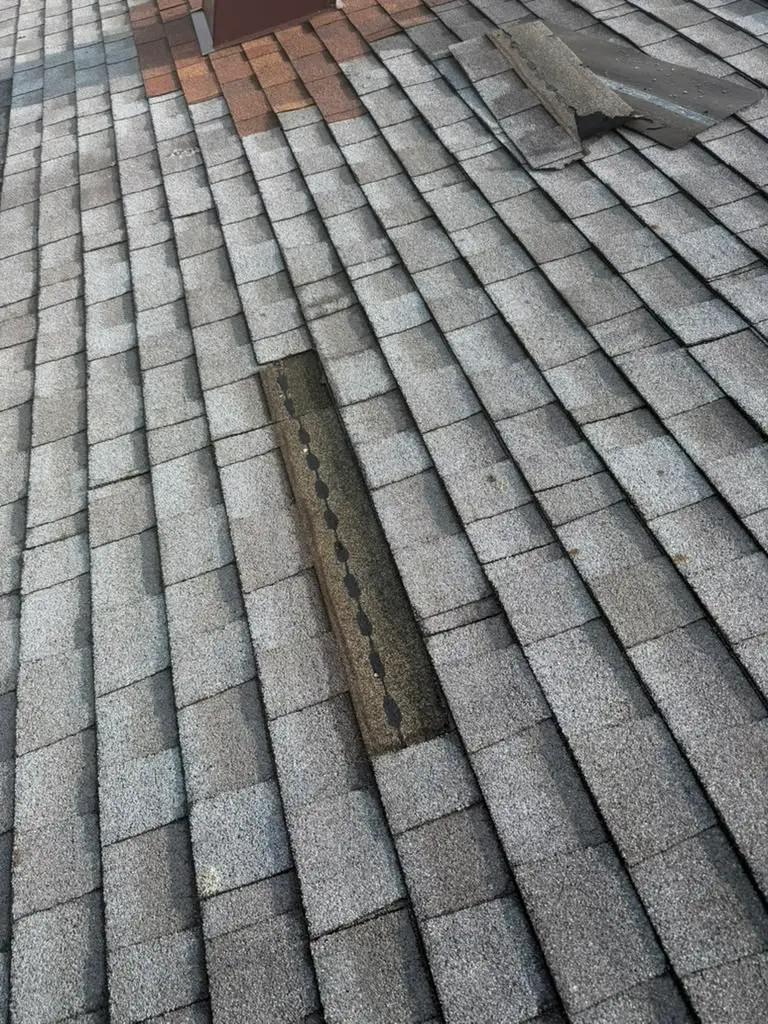
New Jersey homes see their fair share of high winds, hail, and severe thunderstorms throughout the year. The tricky part is that storm damage isn't always obvious from the ground — a roof can look completely fine and still be quietly leaking weeks after the storm has passed. Here's what to check.
1. Missing, Lifted, or Torn Shingles
High winds can lift shingles just enough to break their seal without tearing them off completely — which means the damage can be almost invisible from the ground. Look for shingles that appear slightly raised, curled at the edges, or out of alignment with the rest of the roofline. Any shingle that's completely missing is an obvious sign, but the "half-lifted" ones are actually the ones most likely to leak first.
2. Dented or Bruised Shingles from Hail
Hail doesn't always crack a shingle outright — it often leaves small dents or "bruises" in the surface that compromise the waterproof layer underneath without being visible unless you're up close. These soft spots can be checked by gently pressing on the shingle; if it feels spongy or gives slightly, that section has likely lost its protective seal.

3. Granule Loss Around Downspouts
After a hailstorm or heavy wind event, check the ground near your downspouts and gutters. A noticeable buildup of shingle granules — the small, sand-like coating that protects shingles from UV rays — is a strong sign that the storm knocked loose more granules than normal wear and tear would explain.
4. Dented Gutters, Vents, or Flashing
Your roof isn't the only surface exposed to hail and debris. Dents in gutters, roof vents, or metal flashing are often the clearest visible evidence that a storm was severe enough to affect the roofing material as well — even if the shingles themselves look intact at first glance.
- Debris on the roof: Fallen branches or heavy debris can crack shingles or puncture the roof deck.
- Water stains after the storm: New ceiling stains that appear shortly after a storm are a strong indicator of roof damage.
- Soft or sagging spots: Areas of the roof deck that feel soft underfoot may have absorbed water.
- Loose or missing flashing: Flashing around chimneys and vents is especially vulnerable to wind uplift.
"Most storm damage doesn't cause a leak right away — it creates a weak point that fails weeks or months later, often during the next storm."
5. New or Worsening Leaks After a Storm
If you notice a new leak, a musty smell in the attic, or a ceiling stain that appeared shortly after a storm rolled through, that's the clearest sign of all. By that point, water has already found its way past the roofing material — the sooner it's inspected and addressed, the less likely it is to lead to structural damage or mold.
Think Your Roof Was Damaged? Get It Checked For Free
Storm damage claims have a time-sensitive window with most insurance providers, so it's worth having your roof inspected as soon as possible after severe weather — even if nothing looks obviously wrong. If damage is found, our team also handles the entire insurance claims process for you, from documentation and photos to meeting with your adjuster.
Think Your Roof Has Storm Damage?
Schedule your free, no-obligation roof inspection with BNJ Contractors — we'll check for damage and help manage your insurance claim if needed.